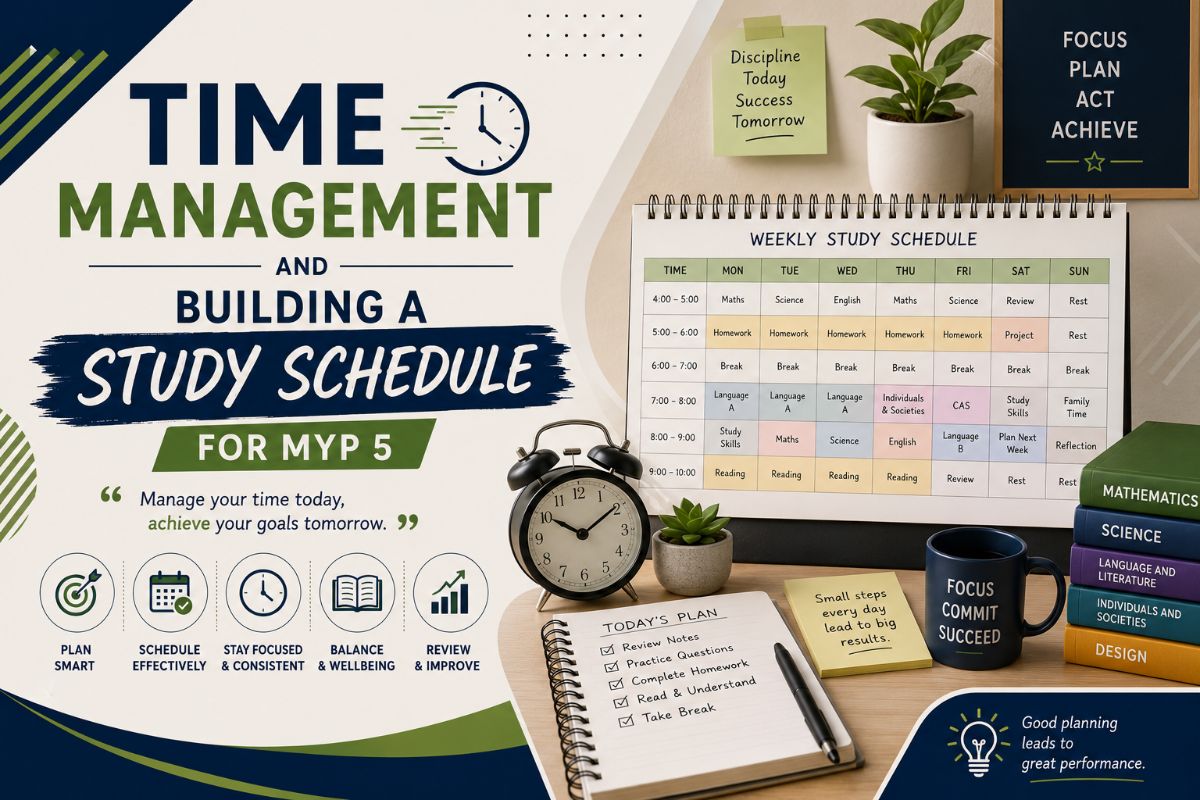
The Challenge of Managing Multiple Subjects
One of the most common struggles MYP 5 students face is the sheer breadth of the programme. With eight subject groups, a Personal Project, and CAS-like activities, students must manage their academic energy across a wide spectrum. Left to their own devices, most teenagers will gravitate toward subjects they enjoy and avoid those they find difficult — a pattern that almost always leads to uneven performance. A structured, parent-supported study schedule is the most reliable antidote.
The Weekly Study Plan: A Framework
Rather than an hour-by-hour rigid timetable, recommend building a flexible weekly framework with your child. This approach respects their developing autonomy while providing enough structure to ensure all subjects receive adequate attention.
A workable model for an MYP 5 student involves 1.5 to 2.5 hours of focused study per day on school days, with longer blocks of 3 to 4 hours available on weekends. Within each study session, use the Pomodoro Technique: 25 minutes of focused work followed by a 5-minute break. After four such cycles, take a longer 20-30 minute break. This method is scientifically validated for maintaining concentration and preventing burnout.
Subject Rotation and Priority Setting
Help your child create a weekly subject rotation so that no subject goes more than two days without attention. Priority should be given to subjects that have upcoming assessments or in which the student is weakest. A simple colour-coded spreadsheet or physical planner works well for this purpose.
The Personal Project in the Schedule
Many students make the mistake of treating the Personal Project as separate from their regular study schedule. In reality, it should be embedded into the weekly plan. Allocating 20–30 minutes per day to the Personal Project — whether that involves research, creation, reflection journaling, or meeting with the supervisor — prevents the last-minute panic that undermines so many otherwise strong students.
💡 Parent Tip: Sit with your child on Sunday evenings for a 15-minute 'study week preview.' Review what is due, confirm the plan for each day, and troubleshoot potential obstacles. This ritual builds executive function skills and keeps parents informed without being intrusive.