What Is the Personal Project?
The Personal Project is arguably the most significant assessment in the MYP. It is a self-directed, inquiry-based project that students in MYP 5 (or sometimes MYP 4) undertake independently over several months. The project is guided by a school-appointed supervisor but is fundamentally driven by the student. It results in a product or outcome (which can be tangible, like a portfolio, prototype, or artwork, or intangible, like a performance or event) supported by a detailed process journal and a final report.
The Personal Project is assessed against four criteria: Criterion A (Investigating), Criterion B (Planning), Criterion C (Taking Action), and Criterion D (Reflecting). Each criterion is marked on a scale of 0–8, giving a maximum total of 32 marks. Understanding these criteria helps parents guide their children without taking over the project.
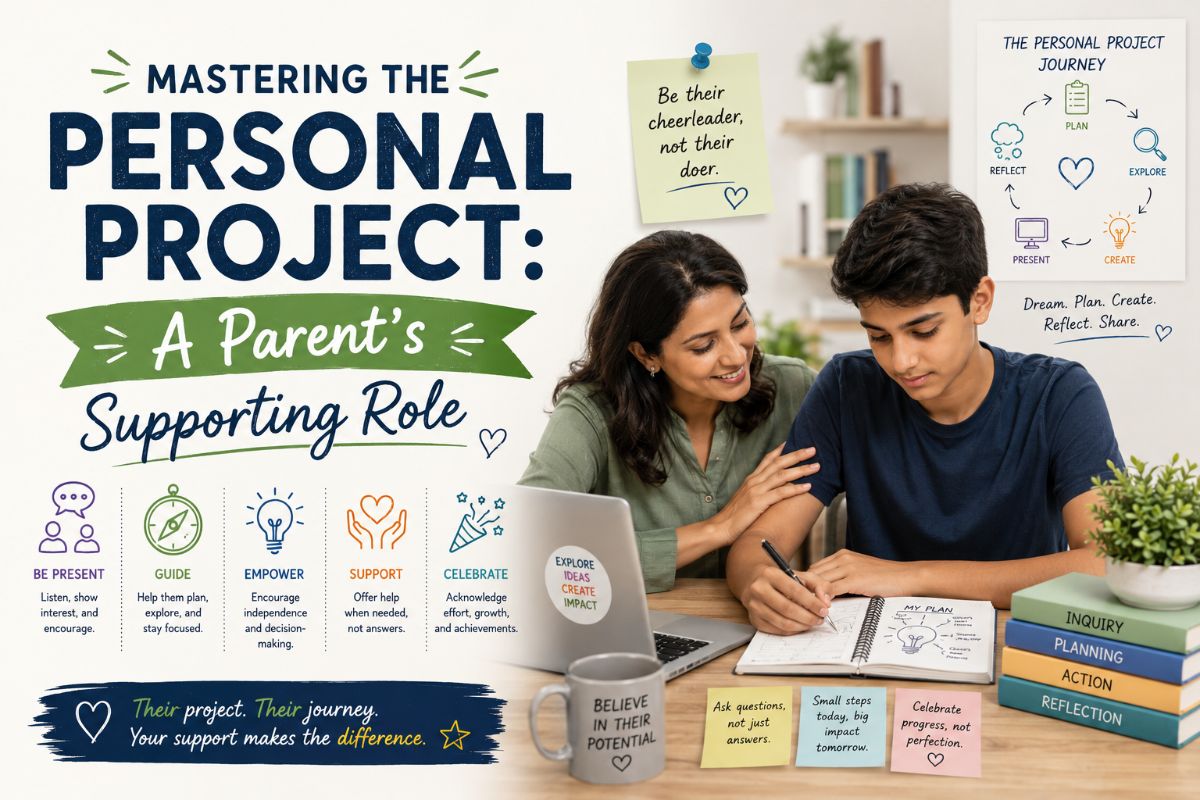
The Parent's Role: Supporter, Not Doer
The most common and most damaging mistake parents make with the Personal Project is doing too much. This takes many forms: editing the process journal, researching the topic on behalf of the student, constructing the product, or writing sections of the final report. Not only does this undermine the academic integrity of the project, it also robs the student of what the project is designed to provide: genuine growth through independent challenge.
The appropriate parent role involves providing materials or resources if requested, offering to proofread (not rewrite) the report, asking questions that stimulate your child's thinking ('Why did you choose this approach? What did you learn from that setback?'), and ensuring your child has the time, space, and energy to work on the project consistently.
Common Personal Project Pitfalls
• Topic is too broad: A student who wants to 'save the environment' will struggle. Encourage a specific, manageable focus such as 'designing a community composting awareness campaign.'
• Outcome and goal misalignment: The product must directly address the stated goal. Help your child ensure consistency between what they planned and what they created.
• Weak reflection: Criterion D is often lost because students describe what they did rather than analysing what they learned. Encourage genuine reflection: what went wrong, why, and what it taught them.
• Leaving it too late: The process journal should document ongoing work. A journal written in the final two weeks is both obvious to assessors and exhausting for students.
💡 Parent Question Bank: Ask your child weekly: 'What did you work on this week? What is your next step? What is the hardest part right now?' These questions prompt reflection without directing the project.