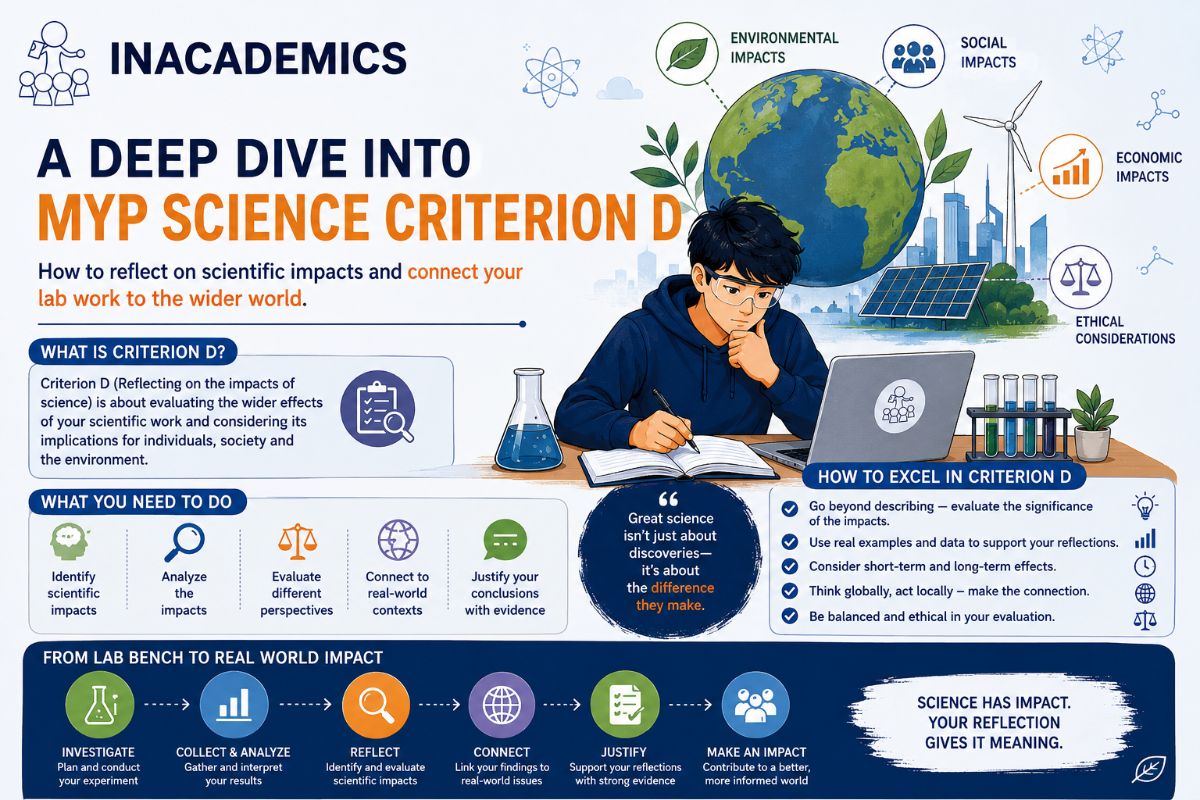
IB MYP Science Criterion D — Reflecting on the impacts of science — is where many science students lose valuable marks. While Criteria A, B, and C reward practical and analytical skills, Criterion D asks you to think like a global citizen: How does science affect society, the environment, and culture? How does your investigation connect to real-world issues? Mastering this criterion requires a shift in mindset from scientist to reflective thinker.
The Three Strands of MYP Science Criterion D
• Strand i: Explain the ways in which science is applied and used to address a specific problem or issue
• Strand ii: Discuss and evaluate the various implications of using science and its application to solve a specific problem or issue
• Strand iii: Apply scientific language effectively
Unpacking Strand i: Application of Science
You must show that science is actively used to solve real problems. Do not just describe what science is — explain HOW it is applied in a specific context relevant to your investigation. If you investigated water quality, explain how chemistry is used by water treatment facilities to address contamination. Specificity is essential for the 5–8 band.
Unpacking Strand ii: Implications and Impacts
This is the heart of Criterion D. You need to discuss multiple types of implications: environmental, economic, social, ethical, and cultural. The command word is 'discuss and evaluate' — meaning you must present different perspectives, weigh them against each other, and reach a reasoned conclusion. A Level 7–8 response will acknowledge the complexity of the issue rather than presenting a one-sided argument.
Connecting Your Lab to the Real World
The most common mistake is treating Criterion D as an add-on to your practical report. Instead, the real-world context should be woven throughout. Before you begin, ask: Why does this investigation matter? Who is affected by this issue? What are the benefits and risks of the science involved? Draft your Criterion D response as a standalone argument, then link it back to your experimental findings.
💡 Inacademics Tip: Inacademic's MYP 5 Science question bank includes dedicated Criterion D practice scenarios with model answers. Each scenario is mapped to a different real-world context — from climate science to medical applications — so you can practise discussing a wide range of scientific implications.